It’s Easter time. A public declaration by the Church and its people about what it stands on. The Sunday when Christians all over the world mourn the loss of Christ and celebrate the rise of Jesus from the dead is upon us. Or is it the loss of Jesus and the rise of Christ… Have a think about that! Tradition instructs those reflecting on the life of God incarnate during Easter to abstain, to give something up for a period known as lent. Chocolate, coffee and cakes are among the favourites. It’s understood that Jesus fasted from water and food for 40 days in the wilderness. That gives some weight to the argument that the least we can do is 40 days without chocolate!
The general idea is that we give up something temporal, something with fleeting pleasure to gain something profound about, God yes, but also ourselves.
Whilst in an Islamic country during Ramadan, the period when Muslims spend time on reflection and abstinence, I had a thought. There are similarities here to the way some Christians approach Easter. It is a time of personal sacrifice and collective remembrance that brings out something deeper about humanity.
One of the differences in approach to these religious fasts is that we Christians tend to be individual in our choice of what we abstain from. We rarely broadcast what we are not having during lent. The actual specifics of what to avoid, chocolate, cake or coffee are not prescribed by the Church, it is a personal choice. It is usually something we recognise we will not find it easy to go without. That’s the sacrifice bit! Many Christians will follow a lent course of some sort during this time. These courses often compliment and give context to the point of our abstinence. We give up our daily slice of cake and use the time to pray and the money we would have spent to a foodbank. We study Jesus’ life of simplicity and think about His ultimate sacrifice.
One of the things we invite, and face at Easter, is temptation. It’s all around us. In one household there may be four people abstaining from four different things. Imagine resisting for lent the coffee you normally enjoy at the start of the day. Yet, during lent you wake each morning and the house is filled with the aroma of your favourite Columbian roast. Your three house mates continue to brew up a pot to enjoy.
Whilst in Abu Dhabi I observe that Ramadan, the Muslim fast, has a daily prescribed routine. It is about the period in which the abstinence and reflection take place as opposed to the ‘from what.’ As a Muslim you can eat as much chocolate, and cake as you want but not whilst the sun is up. There are calls to prayer throughout the day – I could hear that call floating across the rooftops as I wrote this. It is not difficult to see the merits to the Ramadan fast, it looks close to the kind of fasting that took place in Jesus day. When I heard the call to prayer is was as though the whole community was saying, “Let’s all pause our thoughts about food and drink till sunset and use the time to focus on praying together.”
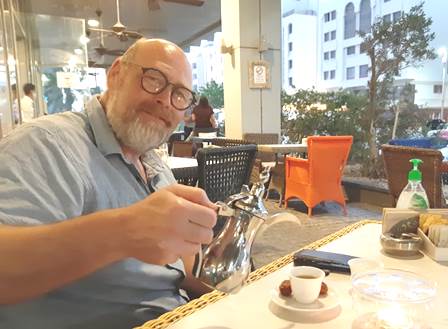
Temptation for those observing Ramadan may appear somewhat mitigated because the majority of society is doing the same thing. And yes, it is hard not eating anything or drinking even water during sun up, especially in a hot country but as the song goes, I get by with a little help from my friends…. I enjoyed seeing the tremendous social respect for those who fast in the UAE. Your mates aren’t brewing up in front of you for the 11 O’clock break. Yet there I was, a Christian in a Muslim country observing my own Easter fast. I was able to sit in a café and have my morning flat white without my usual…, I just did it being mindful of others following a stricter day time path.
Taken seriously both the Lenten and Ramadan fast are tough and tremendously rewarding but not for the faint hearted. The challenge is not did we do it but did we emerge changed? Has our time of fasting and reflection altered how we see the world?
 Rob Wykes