About two and half hours drive from our house and accessed by a causeway is Holy Island in the North East of England. It’s a place with a Celtic Monastery and Christian history. Some years ago I had a wonderful few days there with my wife.
I recall looking at the old walls and odd crumbled remains of a monastic community and thinking about the incredible inward journey those early monks took. They of course were in interesting surroundings and at an interesting point in history.
Recently I found myself only two and a half hours up the coast from another amazing site with a story yet to be fully told. Sir Bani Yas Island with its remains of an Eastern monastery is just off the coast near Abu Dhabi. It is bigger than Holy Island and a boat is needed to get there. Yet it shares the same heritage, an island with a Christian community. It was a place of spiritual reflection and response to faith in God.
Early indications are that the monastery on Sir Bani Yas was active in the sixth and seventh century at the same time the community on Holy Island was. In point of fact not far from Holy Island is St Peter’s Monastery in Jarrow also active around the sixth and seventh century. One historian has noticed a similarity in design between Sir Bani Yas and St Peter’s.
Separated by thousands of miles yet these places of worship were united around the same essential expression of faith. I wonder in which direction the influence may have flowed! The spread of Christian faith in those early centuries following Jesus’ death and resurrection embodied much of the culture of the people receiving and expressing the story of Jesus. Unlike the nineteenth century missionaries dressing people in jackets and ties, many Christians retained the culture familiar to them. I’m encouraged by the fact that whatever cultural differences the monastery in England and Abu Dhabi may have had they held very similar central views- a core if you will.
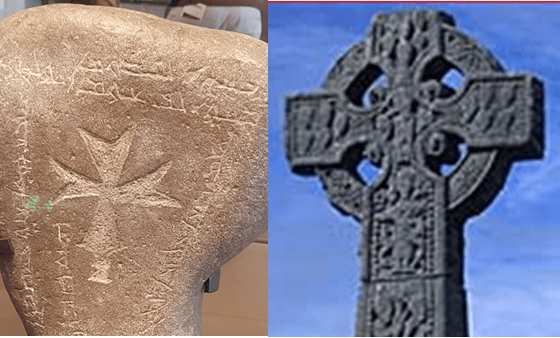
On Holy Island you find Celtic crosses. On Sir Bani Yas the Christians most likely prayed before an Nestorian cross. The core here is a cross and whilst theologians and historians can tell us a great deal about the nuances of the shape of the cross, the monks and the faithful would have seen beyond the shape to the Christ upon the cross.
All around the world today there are active communities of prayer, contemplation and simplicity. They are not all on islands or housed in buildings that will one day become of historical or architectural significance. Such people are gathered around the common desire to seek the mystery of God. Just as1400 years ago on Holy Island and Sir Bani Yas people today will approach Easter looking at a cross. The particular shape and size of that cross will fade as the resurrection comes into focus on resurrection morning.
 Rob Wykes